疑犯追踪
Bollywood and The Middle East: A Growing Connection_我的网站

一 | Bollywood’s bond with the Middle East is entering an interesting and dynamic new phase. With a rapidly growing South Asian population, a thriving expatriate community, the region has evolved into one of the most emotionally invested international markets for Indian entertainment. Today, Hindi films consistently see some of their strongest overseas theatre turnouts across GCC countries, and streaming platforms report exceptionally high engagement for Indian content, from drama and romance to action and biopics.What was once simply a commercially promising territory has now transformed into an important cultural ally. From theatre turnouts and record-breaking weekend collections to booming streaming figures and celebrity-led brand endorsements, the cultural exchange between the two regions is stronger than ever.
For years, icons like Shah Rukh Khan, Salman Khan and Ajay Devgn have been central to this connection. But in the newer generation of stars, one name drawing noticeable attention is Sidharth Malhotra, an actor whose steady filmography, strong performances in films, and wide musical popularity have built him a passionate fan base. From Shershaah and Kapoor & Sons to Ek Villain, Mission Majnu, Marjaavan, and most recently Param Sundari, his journey from an outsider to a leading man has resonated strongly with audiences who admire talent, discipline and humility.Over the past few years, Sidharth’s popularity in the UAE has expanded beyond cinema. His visibility across brand campaigns, social media traction, and public interest indicators shows a star whose appeal aligns seamlessly with the region’s evolving entertainment sensibilities. His recent exclusive partnership with a leading agency for the GCC region further cements this rise, signalling that his resonance is not only powerful but also commercially significant.As Bollywood continues to travel beyond borders, the Middle East is no longer just another overseas market, it is becoming a powerful extension of fandom and identity. The stars finding deep resonance here represent more than popularity; they mark the beginning of a new chapter in how Indian cinema speaks to the world and how global audiences choose their heroes.Also Read: Delhi Blast: Thalapathy Vijay, Sidharth Malhotra and Other Celebs React to The Tragic Incident。

The view of Kolkata, India Photo: VCG
China and India have considerable scope for cooperation in the field of artificial intelligence (AI), as their AI capabilities are complementary in many respects, a senior Indian investor told the Global Times in an exclusive interview.
There is considerable scope for AI cooperation in areas that address common global challenges, including healthcare, education, agriculture, climate resilience, industrial productivity and scientific research, always within the policy frameworks established by the respective governments and international perspectives on responsible and secure AI, Mahendra Swarup, founder of VG Capital and former president of the Indian Venture and Alternate Capital Association, told the Global Times on Wednesday.
AI is likely to become one of the defining technologies of this century. India's strengths lie in software development, engineering talent, digital public infrastructure and entrepreneurial innovation. China has developed significant capabilities in AI applications, hardware, manufacturing and large-scale deployment. "These capabilities are complementary in many respects," Swarup said.
The veteran on the front line of India's venture capital investment sector made the remarks amid improving bilateral ties and a certain level of liberalization of Chinese investments in India.
Chinese investors have historically contributed to the growth of several successful Indian companies, especially start-ups. While investment activity has been moderated by regulatory developments over the past few years, there has always been underlying interest in the Indian market because of its long-term fundamentals, Swarup said.
"If the recent improvement in bilateral relations leads to greater regulatory clarity and business confidence, the Chinese investors will once again evaluate opportunities in India, although the general sentiment is one of cautious optimism," said Swarup.
Amid positive momentum in bilateral relations, Swarup noted rising opportunities for entrepreneurs from the two countries to engage in practical cooperation.
There are several areas where entrepreneurs from India and China could potentially complement each other's strengths, subject to the regulatory frameworks of different sectors in both countries, the investor said, highlighting areas including healthcare technologies, clean energy, electric mobility, advanced manufacturing, climate technologies, industrial automation, logistics and supply-chain innovation.
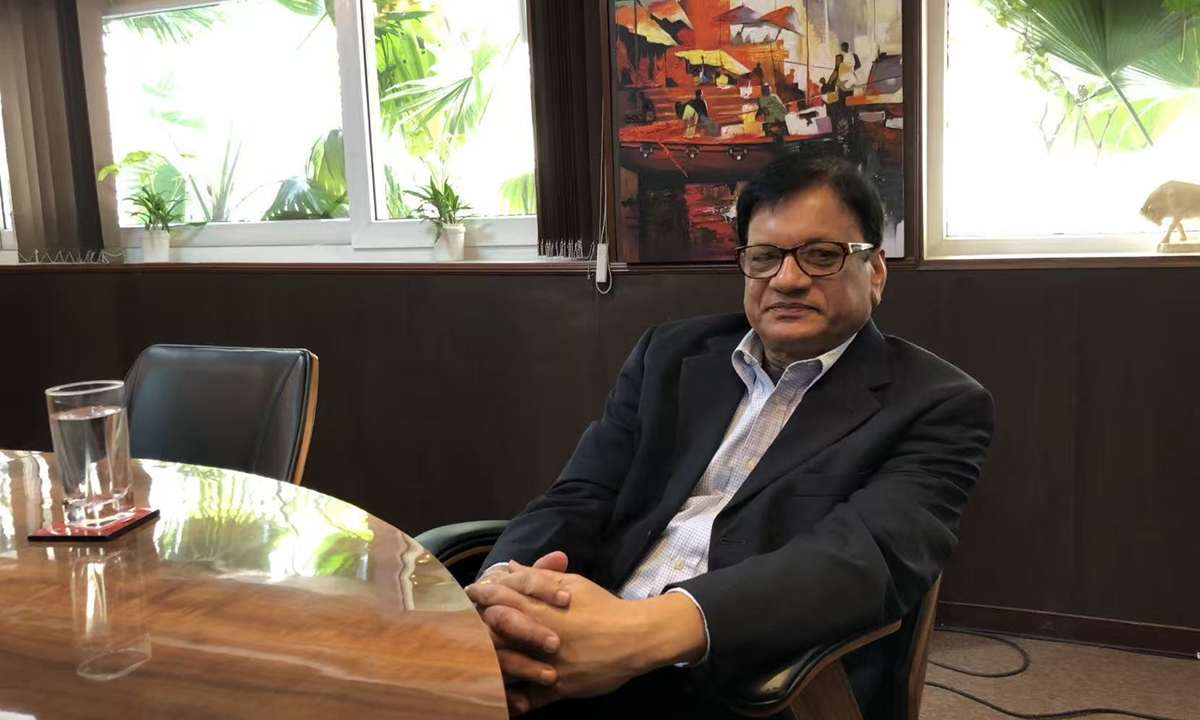
Mahendra Swarup Photo: Chu Daye/GT
"In whichever sector the complementary strengths of both China and India can be brought together responsibly, they can create value not only for both countries but also for global markets," said Swarup.
India has recently shown signs of easing some long-standing restrictions on trade and investment with China, with Chinese experts saying that the move reflects the country's growing recognition of China's importance to its economic development, and a desire to create a more favorable environment for improving bilateral ties.
There has been a gradual policy adjustment, including easing restrictions on foreign direct investment (FDI) in e-commerce, allowing FDI from companies with Chinese ownership, The Hindu reported on August 1.
With India set to host a BRICS summit this year, Swarup also said that Indian and Chinese companies can work together to promote the interests of developing countries.
India and China are both major economies with significant experience in addressing the challenges of development at scale. Although each country has followed its own development path, there are areas where companies from both nations can contribute meaningfully to broader development across Asia, Africa and other emerging markets, Swarup noted.
There is considerable potential for collaboration in affordable healthcare, digital financial inclusion, renewable energy, agricultural technologies, education technology, infrastructure, supply-chain development and support for small and medium-sized enterprises. These are areas where scalable and affordable solutions can have a significant impact on improving livelihoods, the veteran said.
Partnerships that combine technology, entrepreneurship and long-term investment can help create solutions that are both commercially sustainable and socially impactful. "As two of the largest economies in the Global South, India and China have the opportunity to contribute positively to sustainable development through innovation, responsible investment and constructive commercial engagement," Swarup said.
。
Current article:http://eez2ngj.senbatuqiuzhuanlanrilao.sbs/list_4hoi/yuempq2.html
Published on:07:51:06