搞笑一家人
Exclusive: Brazilian soybean industry expects historically high export volumes to China: association_我的网站

一 | 8月25日消息,据凤凰网科技报道,近日,多名金蝶总部员工爆料,公司为推进旗下企业AI原生操作系统“灵基(Lingee)”业务,内部加班已成常态,长期晚间延时工作、下班后集中开会、无加班报酬等问题引发员工普遍质疑。
据在职员工透露,此类高强度工作状态已持续数月。

二 |
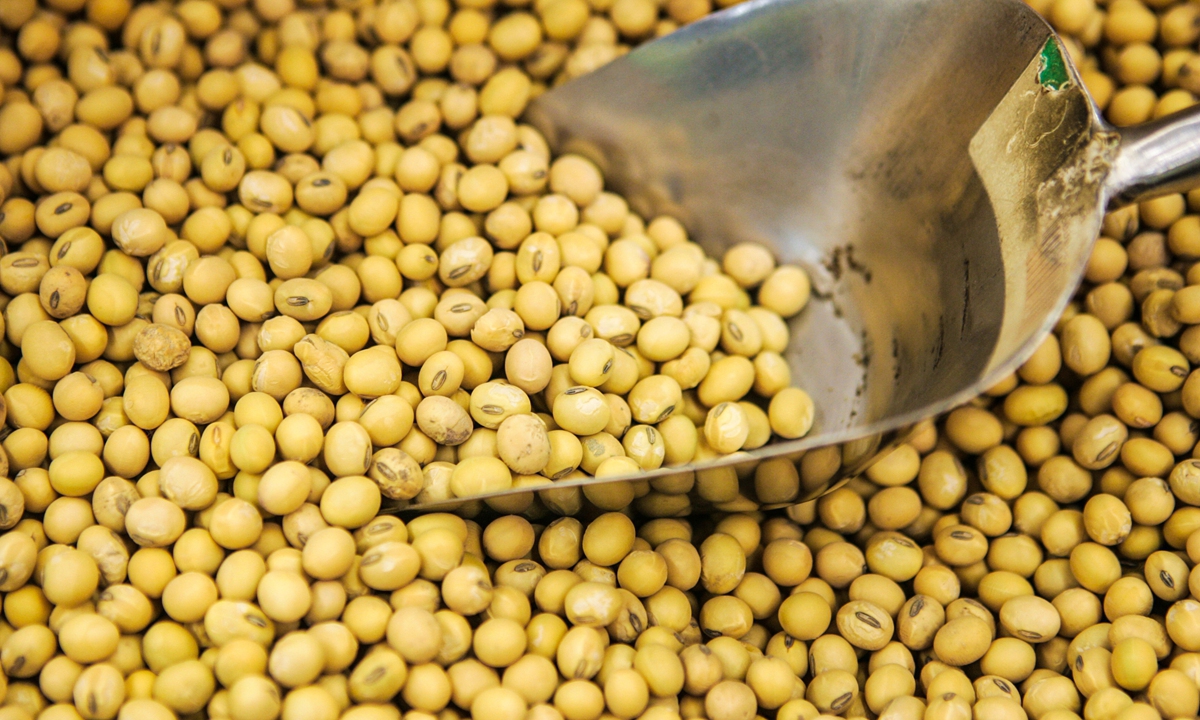
Soybean Photo: VCG
China continues to be the leading destination for Brazilian soybeans, and the Brazilian soybean industry wants to further deepen this relationship, expecting historically high volumes in the coming months, the Brazilian Association of Soybean Growers (Aprosoja Brasil) told the Global Times on Friday.
Brazilian soybean exports to China have remained very strong. China imported 12.08 million tons of soybeans from Brazil in June, up 13.7 percent year-on-year, while imports from the US fell 20.9 percent year-on-year to 1.27 million tons, according to data from the General Administration of Customs.
China imported 34.75 million tons of soybeans from Brazil during the period, up 9.1 percent year-on-year, according to Aprosoja Brasil. "Based on arrivals and customs clearance in China, there was clear growth," the association said.
According to the official data platform Brazilian Comex Stat, which records shipments at origin, 48.32 million metric tons were destined for China from January through June, largely unchanged from 48.41 million metric tons during the same period in 2025.
The difference between the two datasets mainly reflects timing and methodological differences between the recording of departures, cargoes in transit, arrivals and customs clearance.
Aprosoja Brasil said that the broader economic conclusion is the same: "Trade flows remained historically strong, China continued to be the leading destination for Brazilian soybeans, and Brazil's total soybean exports reached a first-half record of 69.57 million metric tons."
For farmers, strong export volumes help support the marketing of the crop, although record exports do not automatically mean record farm margins, said the Brazilian industry association.
China is the world's largest soybean importer. Imported soybeans are mainly used for oil production and animal feed. In terms of trading partners, China mainly imports soybean-related products from Brazil, the US, Argentina, Uruguay and Canada.
Brazil ranks among the world's leading soybean producers and exporters, with China being its largest export market for soybeans, according to the Xinhua News Agency.
Commenting on the significance of the Chinese market, Aprosoja Brasil said "China is absolutely strategic to Brazil's soybean industry," citing data showing that in 2025, China purchased 85.4 million metric tons, representing approximately 79 percent of all Brazilian soybean exports.
The two countries also have a highly complementary trade relationship. For Brazilian farmers, Chinese demand provides scale, market liquidity and greater capacity for long-term planning, said the Brazilian soybean industry association. For China, Brazil offers large, competitive and reliable supplies, as well as a crop calendar that complements production in other supplying countries.
Previously, policy shifts, such as US unilateral tariff measures, have caused disruption for US soybean farmers and other agricultural producers, Lü Xiang, research fellow at the Chinese Academy of Social Sciences, told the Global Times.
At the same time, China has been diversifying imports, including from Brazil and Argentina, to reduce risks from trade uncertainty, according to Lü.
Aprosoja Brasil noted that this partnership should not be seen merely as a temporary consequence of trade disputes involving third countries. Instead, it is a structural and mutually beneficial relationship, based on the complementarity between Brazil's production capacity and China's large demand for food, animal feed and protein, the industry group said.
Looking ahead to the soybean trade for the rest of the year, Aprosoja Brasil said that they are positive, while having a prudent mindset. Brazil has completed the harvest of a record soybean crop of approximately 180.6 million metric tons, and Brazilian soybean exports are expected to reach 116.3 million metric tons in 2026, which would also be a record, the association said.
"Brazil therefore has sufficient supply to continue serving the Chinese market strongly in the coming months... We expect historically high volumes, although not necessarily growth every single month, because soybean trade is seasonal and Northern Hemisphere supplies become more prominent during the second half of the year," it said.
。现阶段多数员工每日直至晚上八九点才能基本下班,即便离岗回家后,仍需持续处理各类工作事务。 不少入职不久的员工在社交平台发帖吐槽,日常下班时间最早为晚间九点多,加班较晚时可达十一点,纷纷质疑高强度延时工作是否已成金蝶企业文化。
从内部工作情况来看,受访内部员工表示,近期发力AI业务的技术部门加班强度显著提升,而销售体系的工作节奏相对缓和。 不过,多个岗位员工均反映,当前职场困扰并非单纯的工作忙碌,不合理的工作安排与制度问题更让人疲惫。

三 | 晚间集中开会是员工吐槽的核心痛点。
多名离职及在职员工表示,公司大量常规沟通会议被固定在傍晚六七点启动,会议常态持续至八九点,部分会议甚至拖延至晚间十点结束。

四 | 且多数会议要求相关人员全员到场、线下参与,直接挤占了员工的晚餐及下班休息时间。 除此之外,金蝶员工明确证实,公司常态化的延时加班工作,均未核算、发放加班费。不少员工坦言,公司工作安排与管理宣传相悖,职场疲惫感持续加剧。 针对网络上热议的“金蝶996”传闻,结合多方采访信息来看,目前金蝶员工工作强度参差不齐,个别团队的高强度加班现状,并非公司全员统一工作状态。
值得注意的是,金蝶近年来员工流失率与人员结构大幅变动。据金蝶2025年ESG报告数据显示,2023年底,金蝶全职员工总数为12348人,2024年降至12149人,2025年底缩减至11294人。 两年时间,公司全职员工累计减少1054人,仅2024至2025一年间,员工就减少855人,降幅达7%。

五 |
【本文结束】如需转载请务必注明出处:
责任编辑:秋白
文章内容举报
。
Current article:http://eez2ngj.senbatuqiuzhuanlanrilao.sbs/ip3x/20260826/4481.html
Published on:20:42:36

 新版强制国标发布 将提升车用压缩天然气产品质量
 腾讯市值再度超越茅台 再登中国上市公司市值首位
 输意大利,中国女排无缘半决赛
 国家防总提升防汛防台风应急响应至三级_四川终止地震一级应急响应_工作
 Global Mobility:预计中国汽车品牌 2030 年在欧洲年产量将达百万辆
查看所有0条评论>>